

Integrate Supabase
Connect your Supabase account to Scrut to pull in user access data for Access Reviews and run automated tests that check your Supabase project against your applicable compliance frameworks.
What This Integration Does in Scrut
- User Access Data: Fetches user details, roles, and permissions from Supabase for Access Reviews.
- Automated Tests: Runs automated checks that evaluate Supabase for compliance checks against your applicable frameworks.
Prerequisites
- An active Supabase account with access to the project you want to connect
- Permission to generate personal access tokens in Supabase
Permissions and Access Requirements
For Supabase
- A Personal Access Token (PAT)
For Scrut
- Admin access to Scrut (or Contributor with access to the Integration module)
Data Collected
- User Name: Synced from the user's Supabase profile
- User Email: Used to match and identify users during Access Reviews
- User Role: Synced from the user's assigned role in the Supabase project
Sync Frequency
Data is synced automatically once every 24 hours. You can also manually trigger a sync from the integration settings page.
Integration Setup
Step 1: Generate a Personal Access Token in Supabase
- Log in to your Supabase account and click your profile icon in the top right corner.
- Select Account from the dropdown menu.
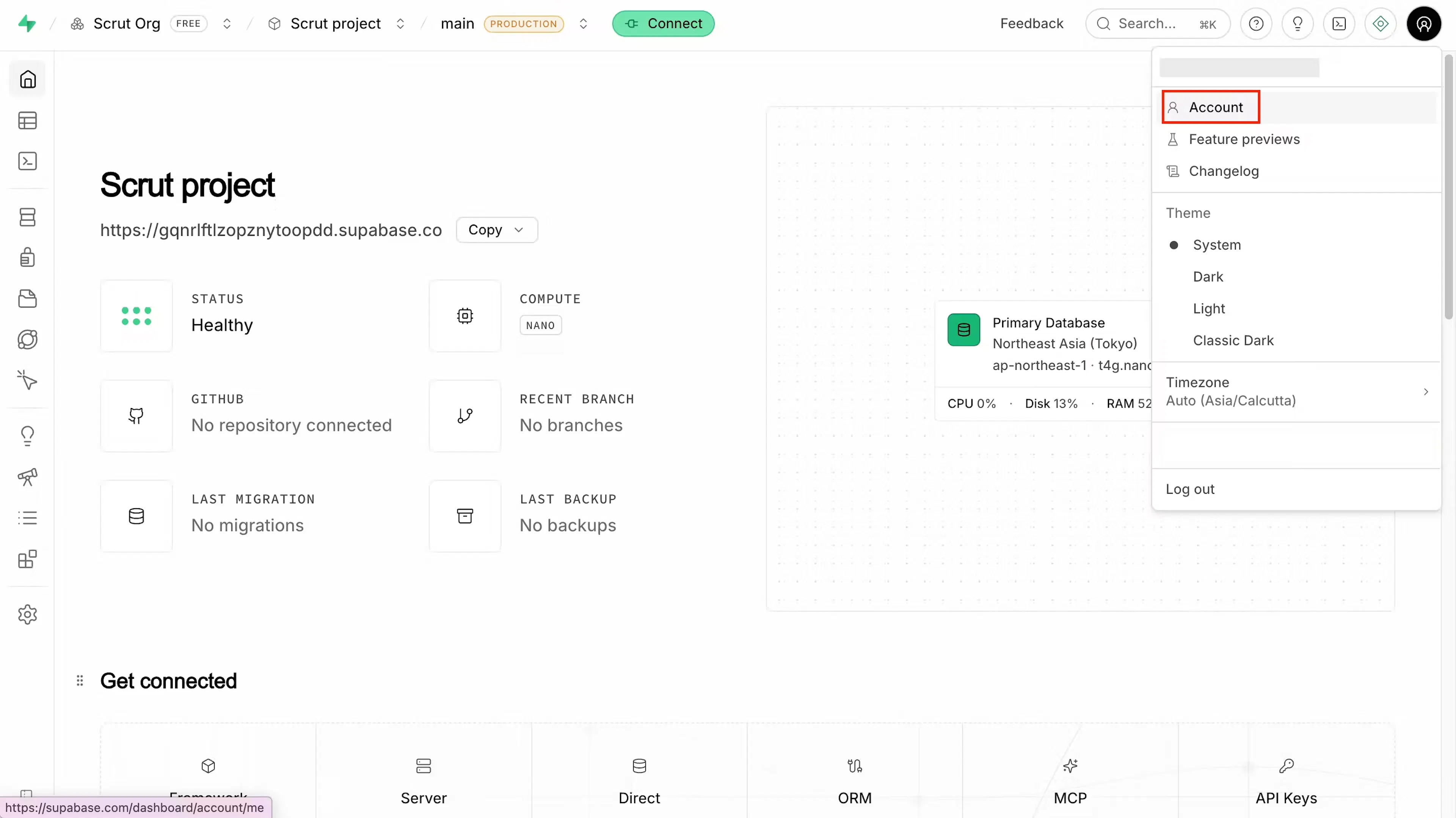
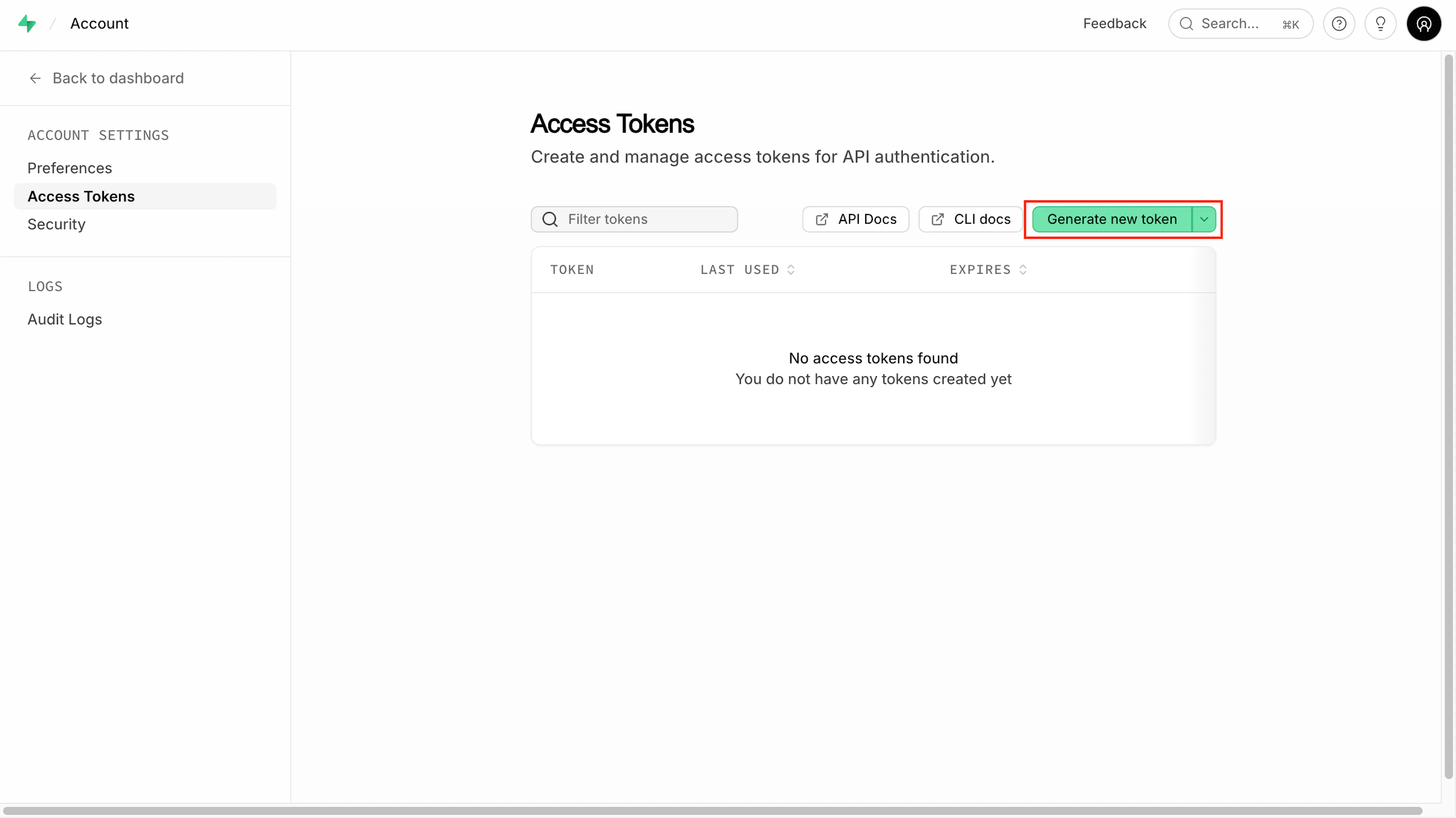
Supabase Account Settings - In the left sidebar, click Access Tokens.
- Click Generate new token.
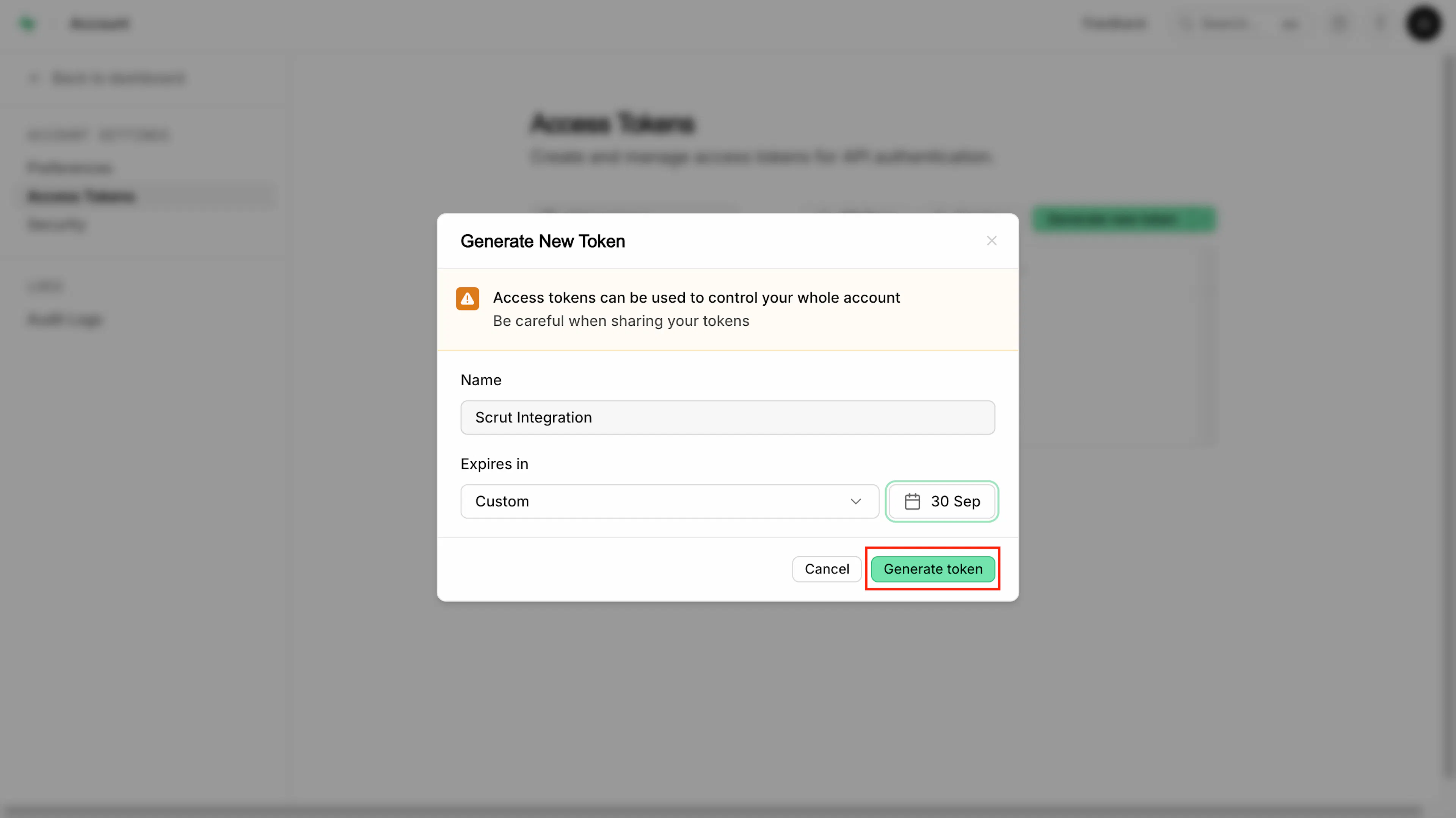
- Enter a name for the token, for example Scrut Integration.
- Set an expiration using the Expires in dropdown, or select Custom to choose a specific date.
- Click Generate token.
- Click Copy to copy the generated token.
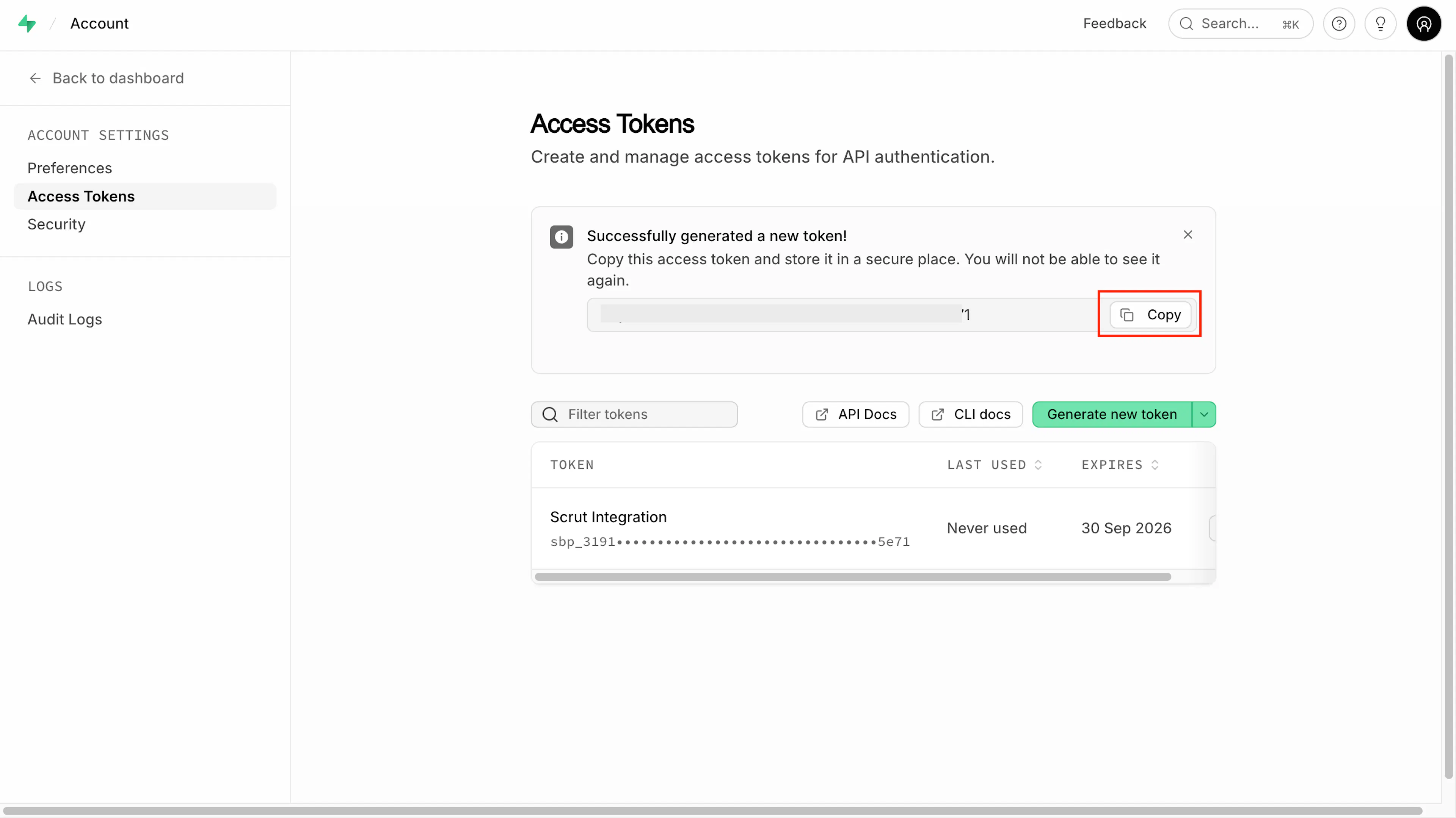
Important: Store this token securely and avoid sharing it. You will not be able to view the token again once you leave this screen.
Step 2: Add the Token to Scrut
- Log in to Scrut and click Integrations in the left sidebar.
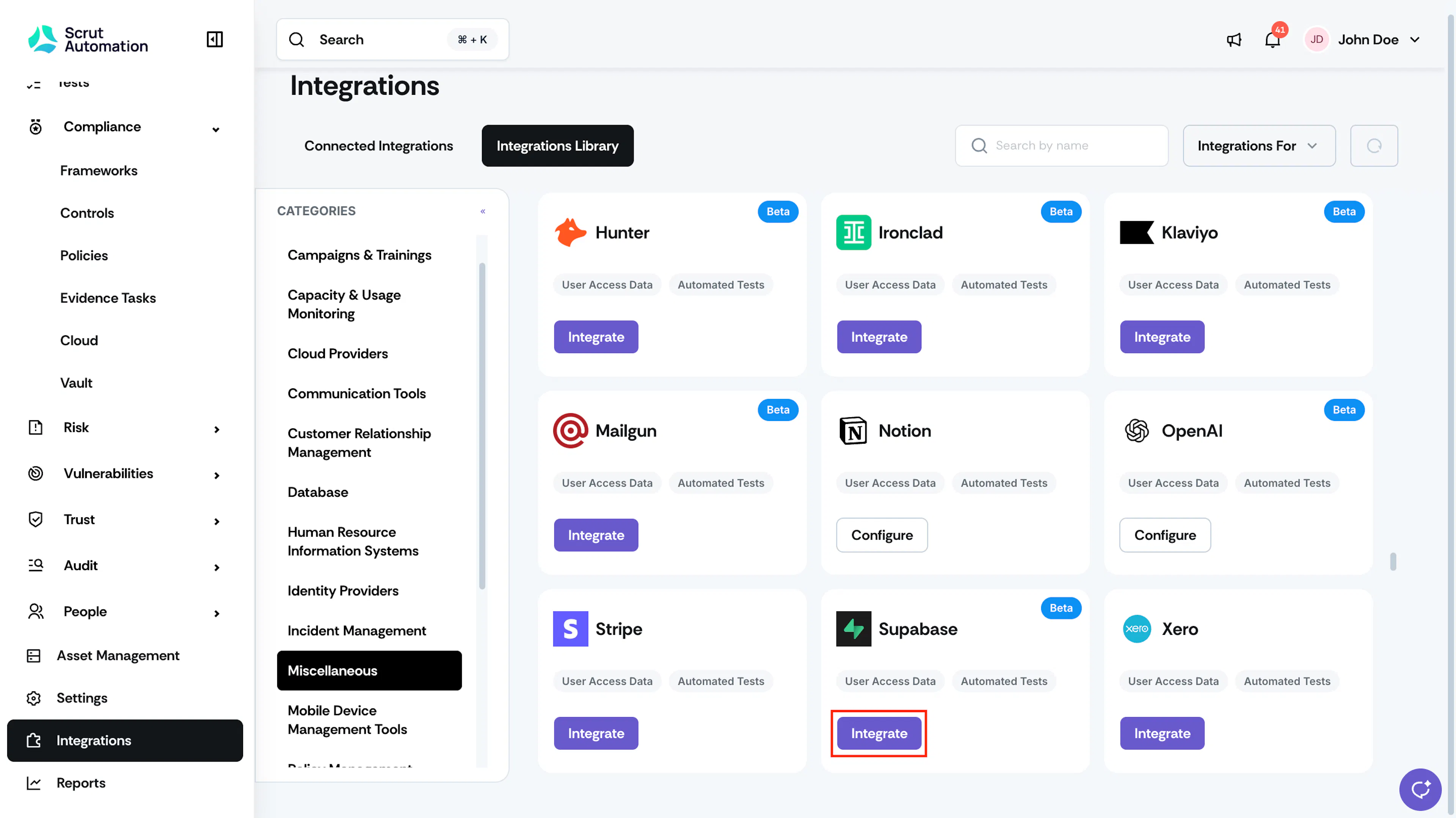
- On the Integrations Library page, find the Supabase card and click Integrate.
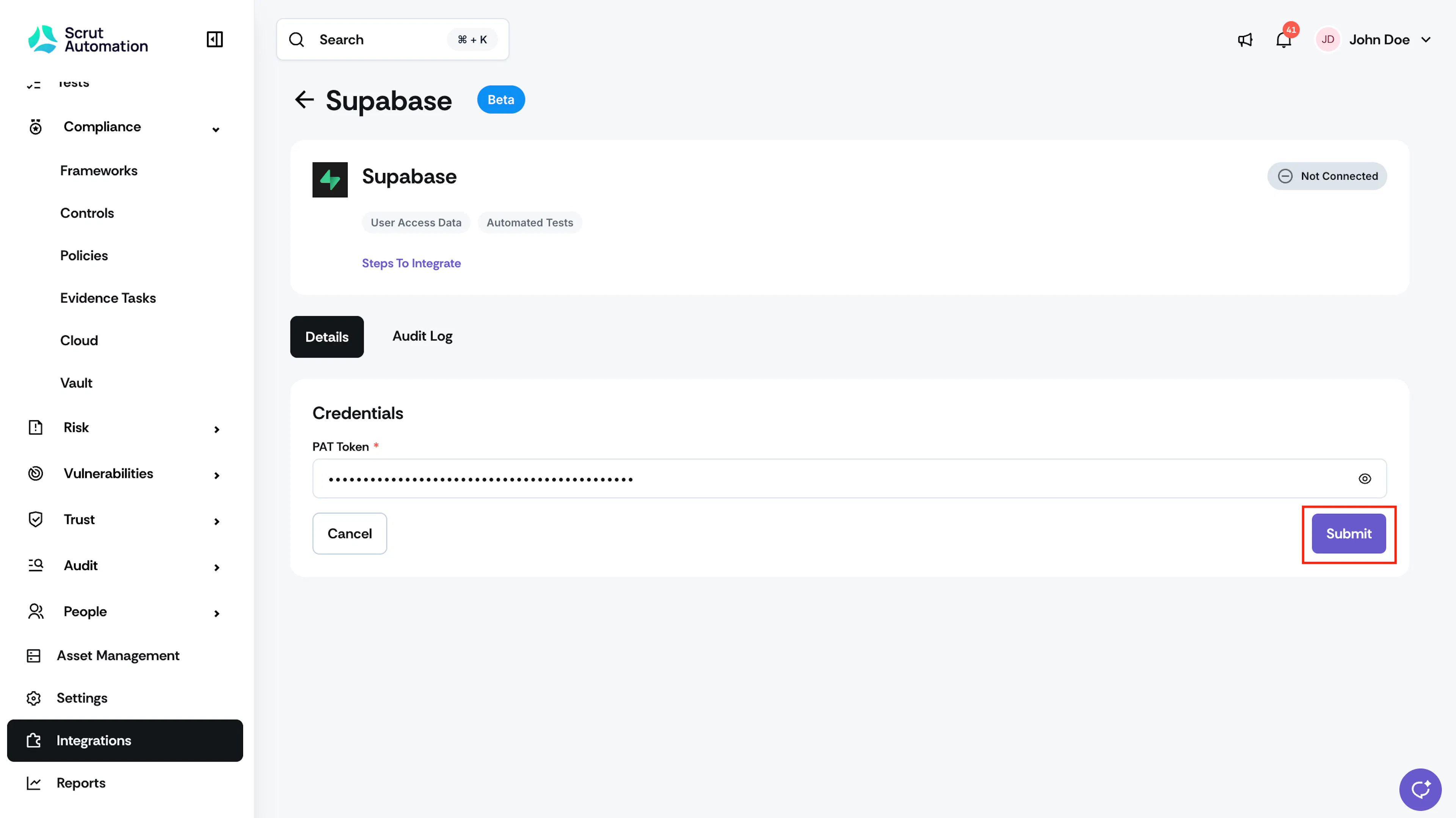
- On the Supabase integration page, paste the token you copied from Supabase into the PAT Token field.
- Click Submit.
What Happens Next?
Initial data sync
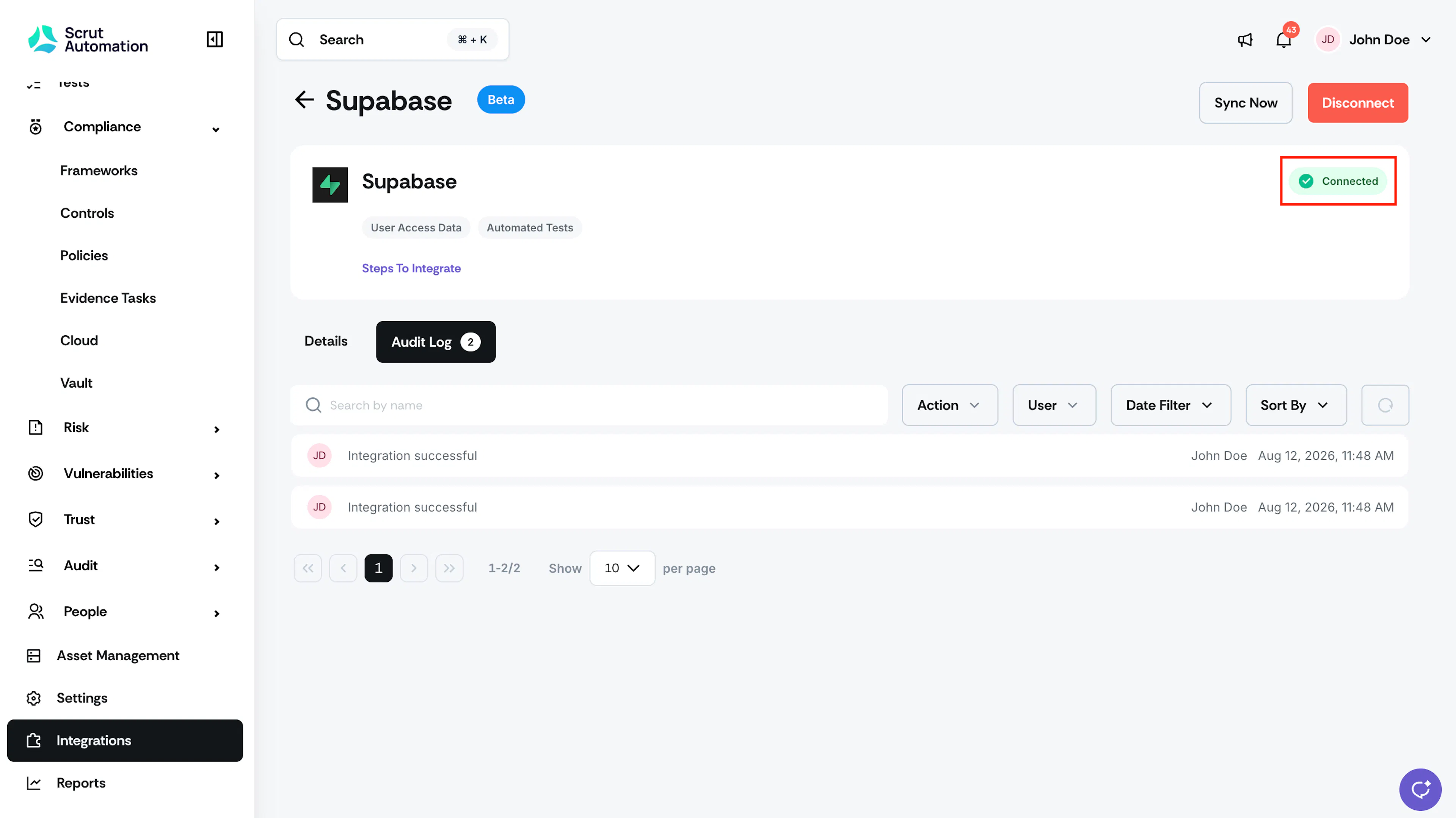
Once you submit the token, Scrut validates the connection and the integration status changes from Not Connected to Connected. The initial sync begins automatically. Monitor the connection by checking the Audit Log tab on the Supabase integration page.
Review synced data
- Navigate to People → Access Reviews module in Scrut to view the user records fetched from Supabase, including name, email address, and role.
- Navigate to Tests → Automated Tests to view the compliance checks that Scrut runs for Supabase.
Common Errors and Troubleshooting
Invalid or Expired Personal Access Token
Cause: The token was revoked in Supabase, expired based on the expiration date set during creation, or was copied incorrectly.
Possible solutions:
- Generate a new personal access token in Supabase and submit it again on the Supabase integration page in Scrut.
- Check the Expires column on the Access Tokens page in Supabase to confirm the token is still valid.
Integration still shows Not Connected after submitting the token
Possible solutions:
- Confirm the token was copied in full with no extra spaces before pasting it into the PAT Token field.
- Regenerate the token in Supabase and submit it again.
- Reach out to Scrut support if the status does not update after resubmitting.
User access data not appearing in Scrut
Possible solutions:
- Confirm the integration status shows Connected on the Supabase integration page.
- Check the Audit Log tab for failed sync entries.
- Wait for the next 24-hour sync cycle, or trigger a manual sync from the integration settings page.
- Contact Scrut support if the data does not appear after a successful sync.
FAQs
Reach out to support@scrut.io or contact your CSM for further assistance.